How to Plan a Multi-Island Philippines Trip: Boracay, El Nido and Siargao

Boracay’s powdery sand. El Nido’s limestone lagoons. Siargao’s waves and coconut-lined roads.

It’s no surprise that so many travelers want all three in one trip. And you absolutely can do it. But the Philippines is an archipelago of thousands of islands, and getting between them takes a little more planning than hopping on a train.

The good news? With the right route, the right number of days and a bit of flexibility, a multi-island trip is one of the most rewarding journeys you can take. We’ve been welcoming travelers in all three destinations for years, and this is the guide we wish everyone read before booking their flights.

We’ll keep things general where schedules and fares change often, and point you to the details that matter most.

First, Understand How the Islands Connect

Boracay, El Nido and Siargao are in three different regions of the country:

  • Boracay is in the Western Visayas, off the northern tip of Panay.
  • El Nido is at the northern end of Palawan, on the western side of the country.
  • Siargao is in the southeast, off the coast of Mindanao, facing the Pacific Ocean.

Because they’re spread out, you’ll travel between them mostly by plane. Most routes connect through the big domestic hubs, mainly Manila and Cebu. Direct routes between smaller airports do appear from time to time, but they can change by season, so always check the airlines’ current schedules.

The key thing to remember: every move between islands is usually a full travel day. Plan for it, and you’ll enjoy the journey instead of racing against it.

Getting to Each Island

Boracay

Boracay doesn’t have its own airport. Travelers usually fly to Caticlan, which is close to the jetty port, or to Kalibo, which is further away and needs a longer road transfer. From the Caticlan jetty port, a short boat ride takes you across to the island.

At the jetty you’ll pay a few local charges: the Boracay environmental fee (₱300 for foreign visitors and ₱150 for local visitors at the time of writing, once per stay), a port terminal fee and the boat fare. You can pay at the counter or online in advance through the official Boracay iPass portal.

Once you’re on the island, Happiness Hostel Boracay is on Bulabog Road. We can arrange van transfers if you send us your flight details before you arrive.

El Nido

There are two main ways in:

  • Fly direct to El Nido (Lio) Airport. It’s small and close to town. From there, it’s about a 15-minute tricycle ride to Happiness Hostel El Nido.
  • Fly to Puerto Princesa, then travel by road. This is often a more affordable option, but it’s a long drive, usually somewhere between four and six hours by van or private car.

Some travelers also arrive by ferry from Coron, another beautiful part of northern Palawan. Our El Nido team can help with Coron ferries and van transport from either airport.

Every tourist in El Nido pays the Eco-Tourism Development Fee (ETDF). The regular rate is ₱400 and it’s valid for five days.

Siargao

Most visitors fly into Siargao’s Sayak Airport, usually connecting through Manila or Cebu. You can also reach the island by ferry from Surigao City to Dapa port. From the airport or port, you’ll travel by road to General Luna, where Happiness Hostel Siargao and Happiness Beach Resort are based. Again, we can arrange a van transfer if you send your flight details.

For more on getting around each island once you’ve arrived, see our ultimate travel guide to Siargao, Boracay and El Nido.

How Many Days Do You Need?

This is the big question. Here’s our honest take, based on what we see guests enjoy most.

The minimum: about 10 days

You can technically see all three islands in around 10 days, but it’ll feel fast. With travel days in between, you’d get roughly two to three full days in each place.

The sweet spot: about 14 to 16 days

Two weeks or a little more gives you around three to five full days per island, with breathing room for weather delays and lazy days. This is what we usually recommend.

The dream: three weeks or more

If you have the time, slow down. Learn to surf properly in Siargao, try several boat tours in El Nido and actually rest in Boracay. You’ll come home relaxed rather than needing another holiday.

Short on time?

If you have a week or less, pick two islands, or even just one. Seriously. One island done well beats three islands done in a rush.

Sample Routes at a Glance

Trip lengthSuggested splitBest for
7 daysTwo islands, about 3 nights each (for example El Nido and Boracay)First-timers with limited leave
10 daysAll three, about 3 nights eachTravelers who don’t mind a quick pace
14 daysSiargao 5, El Nido 4, Boracay 4 (plus travel days)A balanced, relaxed trip
21 daysSiargao 7 to 8, El Nido 6, Boracay 5 (plus travel days)Slow travelers, surfers and remote workers

These are suggestions, not rules. Shuffle the days to match what you love most.

Which Order Should You Visit?

There’s no single right order, but a few ideas can help.

Start adventurous, end relaxed

Many travelers like to start with the most active island and finish somewhere easy. For example: Siargao, then El Nido, then Boracay. Surf and explore first, island hop in the middle, and end with beach days and sunsets before your flight home.

Follow the flights

Your international arrival and departure airports matter. If you’re landing in Manila, it may be easiest to start with the island that has the most convenient connection that week. If you’re flying out from Cebu, finishing in Siargao might make sense. Look at real schedules first, then build the route around them.

Think about the weather

Here’s something many people don’t realise: the islands don’t always share the same weather. According to PAGASA, the national weather agency, the southwest monsoon (habagat) brings rain to the western side of the country, while the northeast monsoon (amihan) brings rain to the eastern side.

Boracay and El Nido sit on the western side, so the middle of the year tends to be wetter there. Siargao faces the Pacific to the east, so it can be rainy during the cooler months too. In practice, this means weather can be good on one island and stormy on another in the same week. Keep your plans flexible.

For surfers, Siargao’s peak wave season is usually late September to November. Our best time to visit Siargao and best time to visit El Nido guides go deeper.

A 14-Day Multi-Island Itinerary

Here’s one relaxed way to do it. Adapt freely.

Days 1 to 5: Siargao

  • Day 1: Fly in, transfer to General Luna, check in after 2:00 PM, sunset at the beach bar.
  • Day 2: Surf lesson in the morning, explore General Luna in the afternoon.
  • Day 3: Tri-Island Tour to Naked, Daku and Guyam Islands (from ₱5,750 per person, minimum two guests).
  • Day 4: Siargao Land Tour to Sugba Lagoon, Magpupungko Rock Pools and Maasin River (from ₱7,300 per person, minimum two guests).
  • Day 5: Slow morning, yoga at the beach resort, or the Booz Cruise in the afternoon (from ₱2,100 per person, 18+).
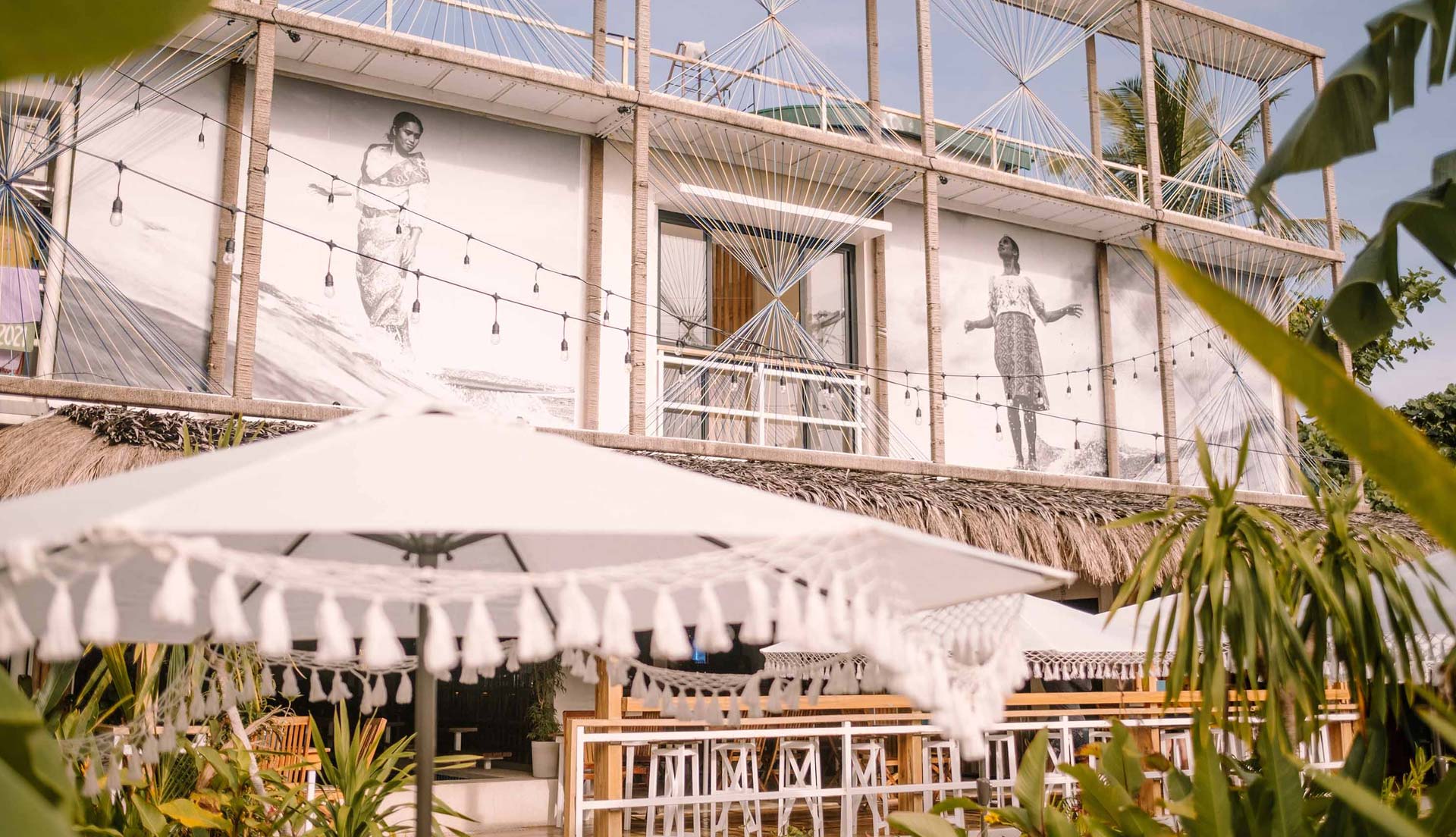
Happiness Hostel Siargao building with its large mural

Day 6: Travel to El Nido

Check out by 11:00 AM and travel to El Nido, usually via a connection. Expect this to take most of the day.

Days 7 to 10: El Nido

  • Day 7: Deluxe Tour A for Big Lagoon and Secret Lagoon (from ₱1,900 per person, plus the ₱400 ETDF).
  • Day 8: Deluxe Tour C for hidden beaches and snorkeling (from ₱1,900 per person).
  • Day 9: Land Tour: Waterfall and Beaches to Bulalacao Falls, Nacpan and Las Cabañas (from ₱5,300 per person, minimum two guests), with an optional zipline.
  • Day 10: Morning Canopy Walk (from ₱730 per person), afternoon yoga or spa at the Boutique Resort.

Day 11: Travel to Boracay

Another travel day, usually with a connection, then the jetty boat across to the island.

Days 12 to 14: Boracay

  • Day 12: ATV Adventure at Newcoast (from ₱2,300 per person), then the pool and skate cafe.
  • Day 13: Helmet Dive (from ₱1,500 per person), and a farewell Sunset Paraw Sailing trip (from ₱3,000 per person, minimum two guests).
  • Day 14: One last swim, check out by 11:00 AM, and head home.

Note: avoid the helmet dive within 12 hours of flying. If your flight is early on Day 14, swap it to Day 12.

Booking Tips That Save Stress

Book flights first, then stays

Flights shape everything. Once they’re set, book your accommodation around the dates. Then add tours.

Leave buffer time

Weather can delay boats and flights. Avoid booking a tight domestic connection on the same day as your international flight home. A spare night near your departure airport is a smart move.

Line up your check-in times

At Happiness, check-in is at 2:00 PM and check-out is at 11:00 AM. If you’re arriving early or leaving late, message us ahead. Early check-in and late check-out may be possible depending on availability.

Know the cancellation rules

You can cancel a Happiness booking by email or phone up to 14 days before arrival. See our terms and conditions for full details, and consider travel insurance for the whole trip.

Book popular tours ahead

In busy months, some tours fill up. Our El Nido team recommends organising tours before you arrive. You can browse everything on our tours page.

Multi-Island Trip Checklist

  • Check entry requirements for the Philippines with official sources
  • Book international flights in and out
  • Book domestic flights between islands, with buffer time
  • Book accommodation on each island
  • Send your flight details to each stay if you need a transfer
  • Pre-book your must-do tours
  • Budget for local fees: Boracay environmental and terminal fees, El Nido ETDF
  • Arrange travel insurance
  • Pack light, with a dry bag and aqua shoes (see our packing list)
  • Carry cash in small bills for transfers and extras
  • Save our contact details for each location

Where to Stay on Each Island

Our hostels are for guests aged 18 and over. Not sure which stay suits you? Our guide to choosing between a hostel, resort or villa can help.

Final Thoughts

A multi-island trip is a big adventure, and the best ones leave room for surprises. A stranger who becomes a friend on a boat. A rainy afternoon that turns into a long, happy lunch. A sunset you didn’t plan for.

Plan the big pieces, keep the small ones loose, and let the islands do what they do best.

If you’d like help planning your route, our team in each location is just a message away. Get in touch.

FAQ: Planning a Multi-Island Philippines Trip

Can I visit Boracay, El Nido and Siargao in one trip?

Yes. Most travelers move between them by domestic flights, usually connecting through Manila or Cebu. Allow a full day for each transfer.

How many days do I need for all three islands?

We suggest around 14 to 16 days for a relaxed trip. Ten days is possible but fast. With a week or less, choose one or two islands.

What’s the best order to visit the islands?

It depends on your flights and the season. Many travelers like starting with Siargao for surf and adventure, then El Nido for island hopping, and finishing in Boracay for beach days.

Are there ferries between the three islands?

Not in a practical way for most travelers. Ferries are useful for shorter hops, such as the boat to Boracay from Caticlan, Surigao City to Siargao, or Coron to El Nido, but flights are usually the way to move between the three main islands.

What to Pack for a Philippines Island Trip: Beach, Boat and Surf Checklist

Packing for the Philippine islands should be easy. Swimsuit, flip-flops, done, right?

Almost. After years of welcoming travelers in Boracay, El Nido and Siargao, we’ve noticed that the same few things make the difference between a smooth trip and a “wish I’d brought that” moment. A dry bag on a boat day. Aqua shoes on a rocky beach. Small bills for a tricycle ride.

So here’s our friendly, tried-and-tested packing list for island life, whether you’re hopping between lagoons, riding an ATV or paddling out for your first wave.

The Golden Rule: Pack Light

Island travel often means boats, tricycles, vans and the occasional walk along the sand with your luggage. A smaller bag makes every transfer easier.

A good tip is to choose a backpack or soft bag you can carry comfortably for a few minutes. Most of what you’ll wear is light, quick-drying and easy to wash.

Clothes for Island Days

  • Two or three swimsuits so one can dry while you wear another.
  • A rash guard for snorkeling and surfing. It protects you from the sun and means you need less sunscreen.
  • Light, breathable clothes like cotton or linen shirts, shorts and a sundress or two.
  • Quick-dry clothes for boat days and adventures. Our Sohoton Cove tour page specifically recommends dry-fit clothing.
  • A light cover-up or jacket for breezy boat rides and air-conditioned vans. Our Sunset Paraw Sailing page suggests one for the evening breeze.
  • Something a little nicer for a sunset dinner.
  • A light rain jacket, especially if you’re traveling during the rainy season.

Shoes: Fewer, But the Right Ones

  • Flip-flops or sandals for everyday island life.
  • Aqua shoes for rocky beaches, coral areas and boat landings. They’re on the “bring” list for our El Nido island-hopping tours and aren’t included, so pack your own.
  • Closed-toe shoes for adventures on land. Our Boracay ATV ride and El Nido Canopy Walk both ask for closed-toe shoes or sturdy footwear.
  • Sandals with grip for waterfalls and wet rocks.

The Boat Day Kit

Island hopping is a highlight in all three destinations. These are the things you’ll want in your day bag:

Guests climbing aboard a bangka on a boat day in Siargao
  • A dry bag to keep your phone, cash and cards safe from splashes.
  • A waterproof phone pouch or a phone strap for photos on the water.
  • A quick-dry towel. Towels aren’t included on our El Nido Deluxe Tours.
  • A refillable tumbler to top up drinking water.
  • Snorkel gear, if you have your own. Mask and snorkel are included on our El Nido Deluxe Tours, but snorkels and fins aren’t included on our Siargao Tri-Island Tour, Booz Cruise or Sohoton trip.
  • A hat and sunglasses. Some sandbars, like Naked Island in Siargao, have no shade at all.
  • Light snacks for longer days.

Sun and Skin Care

  • Reef-safe sunscreen. Please choose a reef-friendly formula. The coral will thank you.
  • After-sun lotion or aloe vera for those “oops, I forgot to reapply” days.
  • Insect repellent for land tours, waterfalls and evenings. It’s on the packing list for our El Nido land tours and Sohoton Cove trip.
  • Lip balm with SPF.

Tech and Power

The Philippines uses plug types A, B and C, on a 220V supply at 60Hz. A universal adapter, or a type C adapter as a minimum, is a good idea.

  • A universal travel adapter
  • A power bank for long boat days and travel days. Power outages can happen on the islands, though all Happiness accommodations have generators.
  • An action camera or phone with a strap for ziplines, ATVs and snorkeling.
  • Headphones for flights and van rides.

Money Matters

  • Cash in small bills. Tricycles, small eateries, local vendors and some fees are easiest to pay in cash.
  • Money for local fees. El Nido has an Eco-Tourism Development Fee (₱400 at the regular rate, valid for five days), and Boracay has an environmental fee plus a terminal fee at the jetty port. Check current amounts before you go.
  • Money for extras. Things like kayak rental, entrance fees not included in a tour, photos, and tips for your guide.
  • A card for bigger purchases, as a backup.

Documents and Essentials

  • Passport and a copy (digital and paper).
  • Valid ID. Some activities, like our Boracay ATV ride, may ask for it at registration.
  • Booking confirmations for flights, ferries, stays and tours.
  • Travel insurance details. Insurance isn’t included on our tours, so it’s worth arranging your own.
  • Entry requirements. Always check the latest entry rules for the Philippines with official sources before you travel.

A Small Health Kit

  • Any personal medication, with a copy of your prescription
  • Plasters and antiseptic for small cuts (reef and rock scrapes happen)
  • Motion sickness tablets if boats or winding roads aren’t your friend
  • Rehydration salts for hot days
  • Hand sanitiser

Extra Items for Surfers

Heading to Siargao for waves?

  • Rash guard or surf top
  • Surf-friendly reef-safe sunscreen
  • Booties if you’re surfing over reef
  • Your own wax and leash if you’re bringing a board

If you’re joining the Happiness Surf Retreat, our team will help guide you on what to bring once you’re booked.

What to Leave at Home

  • Single-use plastics. Bring a tote bag, tumbler and reusable cutlery instead.
  • Heavy jeans and bulky jackets. You won’t miss them.
  • Too many shoes. Three pairs is plenty.
  • Expensive jewellery. It’s one less thing to worry about on boats and beaches. (And loose jewellery has to come off for activities like our Boracay helmet dive anyway.)

Packing with care is part of traveling with care. Our post on how to leave no trace has more simple habits for keeping the islands beautiful.

Forgot Something?

Don’t stress. Our Happiness shops in Boracay and Siargao stock island essentials and favourite brands, and our team at each location is always happy to point you in the right direction. Planning your stay? Explore Boracay, El Nido and Siargao, or browse our tours.

FAQ: Packing for the Philippine Islands

What shoes should I bring to the Philippine islands?

Flip-flops for everyday, aqua shoes for boat days and rocky beaches, and one pair of closed-toe shoes for activities like ATV rides and canopy walks.

What plug adapter do I need in the Philippines?

The Philippines uses plug types A, B and C on 220V, 60Hz. A universal adapter covers you, and a type C adapter is a good minimum.

Do I need cash on the islands?

Yes, it’s very useful. Bring small bills for tricycles, local eateries, extras on tours and local fees.

Are towels included on island-hopping tours?

Not on our El Nido Deluxe Tours, so bring a quick-dry towel. It’s a good idea to pack one for any boat day.

Best Time to Visit Siargao: Surf Season, Weather and Crowds

Siargao has a funny way of making people extend their stay. One week becomes two. Two weeks becomes “maybe I’ll just stay for the season.” (We’ve written about the Siargao curse before. It’s real.)

But when should you actually go? The answer depends on what you want from your trip. Big waves or gentle ones? Sunny beach days or quieter, greener weeks? Busy line-ups or space to breathe?

Here’s a friendly guide to Siargao’s seasons, for surfers and non-surfers alike.

Understanding Siargao’s Weather

Siargao sits on the Pacific side of the Philippines, facing east. That matters, because it means the island doesn’t follow quite the same pattern as places on the western side of the country.

Nationally, PAGASA (the Philippine weather agency) describes a rainy season from June to November and a dry season from December to May. But PAGASA also notes that the northeast monsoon (amihan) brings rain to the eastern side of the country. For Siargao, that means the cooler months around the end and start of the year can be rainy too.

In short: Siargao can get rain in any month. It’s a tropical island, and showers often come and go quickly. Pack a light rain jacket, keep your plans a little flexible, and you’ll be fine.

Surf Season: When Are the Waves Best?

Siargao is often called the surf capital of the Philippines, and for good reason.

Peak surf: late September to November

According to local surf guides, the most powerful and consistent waves usually arrive from around late September to the end of November. This is when ground swells from storms out in the Pacific combine with lighter winds, and Cloud 9 can show off the hollow, barrelling waves it’s famous for.

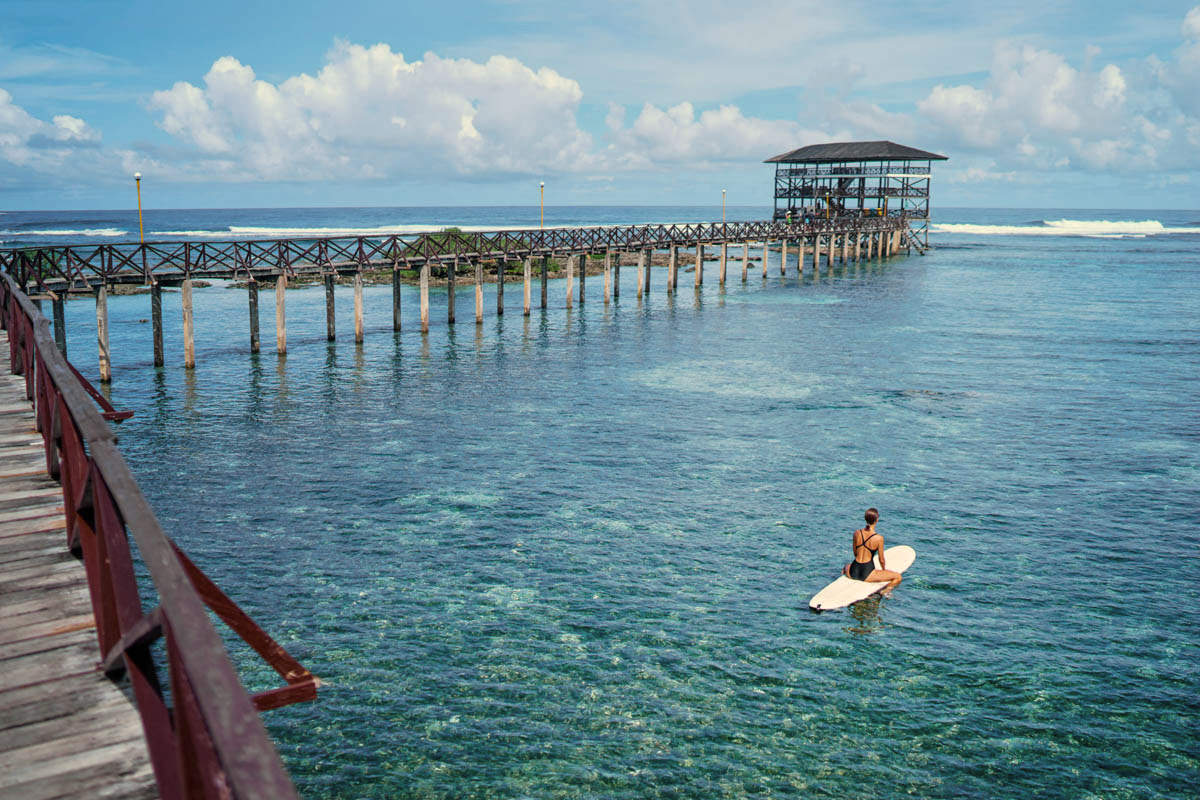
Surfer paddling past the Cloud 9 boardwalk in Siargao

It’s also the busiest time for surfers. The Siargao International Surfing Cup is usually held around this time of year (traditionally in the second half of October), bringing pro surfers, crowds and a buzzing atmosphere to General Luna.

Best for: experienced surfers who are comfortable on reef breaks.

Mid-year: smaller waves, great for learning

Around the middle of the year, the swell is typically much smaller. Experienced surfers may find it too flat, but for beginners it can be a lovely time to learn, with gentle waves and less crowded line-ups.

Best for: first-timers and beginners.

The cooler months: swell, with patience

From around December into the early months of the year, there’s often still swell, but the northeast winds can make conditions messy at exposed spots. Some days are great, others not so much.

Best for: patient intermediate and advanced surfers who like quieter line-ups.

Important: Cloud 9 is a shallow reef break. If you’re new to surfing, learn with an instructor at a beginner-friendly spot first. Your local surf school will know where to go on the day.

Beach and Island-Hopping Season

Not here to surf? No problem. Siargao has so much more.

For island hopping, lagoon swims and beach days, look for a run of calm, sunny days. Many travelers find the drier stretch around March to May especially pleasant for this, though conditions vary year to year.

Whenever you come, a few things are worth planning around:

  • Boat trips depend on the sea. Our island-hopping tours can change or be moved if conditions aren’t safe.
  • Some spots depend on the tide. Magpupungko Rock Pools only appear at low tide, and the entrance to Sohoton Cove is accessible during low tide. Our guides time trips around this.
  • Early mornings are magic. Cooler air, softer light and quieter beaches.

Our Siargao island hopping guide covers the classic Naked, Daku and Guyam trip, plus Sohoton Cove.

Siargao Season by Season

March to May

  • Often the drier, sunnier stretch
  • Smaller waves, good for beginners
  • Great for beaches, lagoons and island hopping

June to August

  • Typically small surf, good for learning
  • Warm and humid, with some showers
  • A relaxed time to explore the island

September to November

  • Peak surf season, especially from late September
  • Busiest time for surfers, with competition buzz
  • Book accommodation early

December to February

  • Cooler, with rain more likely on the east side
  • Swell around, but wind can make it messy
  • Quieter line-ups for patient surfers

Things to Do Whatever the Weather

Rainy morning? Here’s how to make the most of it:

  • Take a land tour. The Siargao Land Tour visits Sugba Lagoon, Magpupungko Rock Pools and Maasin River with lunch at a local eatery, starting from ₱7,300 per person.
  • Stretch it out. Our Happiness Beach Resort hosts daily wellness activities like yoga, meditation and sound healing. The schedule is posted on our Instagram.
  • Eat your way around General Luna. Siargao’s food scene is a surprise for many visitors. Start with breakfast at Goodies and a falafel at Happiness Restaurant.
  • Join the community. From bingo to movie nights and Sunday fun days, there’s usually something happening. See our events page.

Want to Learn to Surf Properly?

If surfing is the main reason you’re coming, consider joining a retreat. The Happiness Surf Retreat is a 10-day program in Siargao with daily coaching, video analysis, oceanfront yoga and recovery sessions, for complete beginners through to intermediate surfers. Retreat dates are listed on the page, and some fill up fast. We’ve also written a full guide on what to expect on a Siargao surf retreat.

Where to Stay

Happiness Hostel Siargao is on the main road in General Luna and is a lively base for solo travelers and surfers (guests must be 18 or over). Across the road, Happiness Beach Resort offers private rooms, family cottages and a beachfront villa, with a beach bar powered by Starlink.

Power outages can happen on the island, but all our accommodations have generators. Check-in is at 2:00 PM and check-out at 11:00 AM. If you need to cancel, you can do so by email or phone up to 14 days before arrival (see our terms).

FAQ: Best Time to Visit Siargao

What is the best month to surf in Siargao?

For experienced surfers, the peak is usually from late September to November, when Cloud 9 is at its best. Beginners often prefer the smaller waves of the middle of the year.

Does it rain a lot in Siargao?

Siargao can get rain in any month, and the northeast monsoon brings rain to the eastern side of the country in the cooler months. Showers often pass quickly.

Can beginners surf in Siargao during peak season?

Yes, but not at Cloud 9. Beginners should learn with an instructor at gentler, beginner-friendly spots.

When is Siargao least crowded?

Outside the peak surf months and major holidays tends to be quieter. Line-ups are usually busiest from late September to November.

Best Time to Visit El Nido: A Season-by-Season Guide

“When should I go to El Nido?” It’s one of the questions we hear most.

The honest answer: there’s no bad time to fall in love with El Nido. The limestone cliffs, the lagoons and the sunsets over Bacuit Bay are there all year. But the weather, the crowds and even the waterfalls change with the seasons, and knowing what to expect helps you plan a trip that suits you.

Here’s a simple, season-by-season guide.

El Nido’s Seasons in a Nutshell

The Philippines has two main seasons. According to PAGASA, the national weather agency, the dry season runs from December to May and the rainy season from June to November. The dry season is often split into a cool dry stretch (December to February) and a hot dry stretch (March to May).

El Nido sits on the western side of Palawan, and PAGASA notes that the southwest monsoon (habagat) brings rain to the western parts of the country. That’s why the middle of the year tends to be El Nido’s wetter, windier time.

Weather is never a promise, of course. Think of these as patterns, not guarantees.

December to February: Cool, Dry and Popular

This is the cool dry season, and many travelers consider it the most comfortable time of year. Days are warm without being too hot, and the evenings feel pleasant.

What it’s like:

  • Great for island hopping, beach days and sunset drinks in Corong-Corong.
  • Busy, especially around the holidays, so book your stay and tours early.
  • Popular activities can have waiting times. Our zipline page notes that queues can get long during high season, January to April.

Best for: first-timers, island hoppers and anyone who wants the classic El Nido postcard.

March to May: Hot, Sunny and Bright

The hot dry season brings long sunny days and calm-looking water. It’s beach weather in every sense.

Limestone cliffs above clear turquoise water in El Nido on a sunny day

What it’s like:

  • Hot and humid, so plan active things for the morning or late afternoon.
  • Lots of sunshine for photos and lagoon swims.
  • Waterfalls can be thin. Our land tour pages note that Bulalacao Falls may have low water flow in the dry season, March to May.

Best for: sun lovers, snorkelers and anyone who doesn’t mind the heat.

Tip: Pack a hat, reef-safe sunscreen and a refillable water bottle. You’ll use all three every day.

June to November: Green, Quiet and Unpredictable

This is the rainy season. It doesn’t usually mean rain all day, every day, but you can expect more showers, more wind and some days when the sea is too rough for boats.

What it’s like:

  • Fewer crowds and a slower, calmer town.
  • Lush green hills and fuller waterfalls.
  • Island-hopping routes can change. On all our El Nido boat tours, destinations may change based on weather and sea conditions.
  • Tropical storms are possible during this part of the year, so watch the forecast and keep your plans flexible.

Best for: flexible travelers, slow travelers and anyone happy to swap a boat day for a land day when needed.

Tip: Build in an extra day or two so a cancelled boat trip doesn’t mean missing out entirely.

What to Do in Each Season

Island hopping (best in the dry months)

El Nido’s famous boat tours are the highlight for most visitors. Our Deluxe Tours A, B, C and D each start from ₱1,900 per person and run from around 8:45 AM to 5:00 PM. Tour A visits spots like the Big Lagoon and Secret Lagoon, while Tour D is a slower day around Small Lagoon, Cadlao Lagoon and Nat-Nat Beach.

Not sure which one to pick? Our guide to El Nido Tours A, B, C and D breaks them down. You can also go straight to Deluxe Tour A.

Land tours (great all year, perfect for windy days)

When the sea isn’t cooperating, head inland. The Happiness Land Tour: Waterfall and Beaches visits Bulalacao Falls, Nacpan Beach and Las Cabañas Beach, and starts from ₱5,300 per person. For a bigger day, the Land Tour Adventure adds a hike up Mt. Mansilawit and starts from ₱5,900 per person.

Short adventures (any season, weather permitting)

Don’t Forget the Eco-Tourism Fee

Every tourist visiting El Nido pays the Eco-Tourism Development Fee (ETDF). The regular rate is ₱400, and one payment is valid for five days. It isn’t included in our tour prices, so budget for it separately. Keep your receipt somewhere safe, as you may be asked to show it.

Where to Stay, Whatever the Season

We have three places to stay in El Nido:

  • Happiness Hostel El Nido on Serena Street, in the heart of town and steps from the beach. Social, easy and great for solo travelers.
  • Happiness Boutique Resort, a jungle hideaway near Corong-Corong beach with a pool and spa. Yoga and spa sessions are held here, and hostel guests are welcome to join.
  • Happiness Boutique Villas, private villas a short walk from Corong-Corong beach.

Power outages can happen in El Nido, but all our accommodations have generators. Check-in is at 2:00 PM and check-out at 11:00 AM.

So, When Should You Go?

  • For the most comfortable weather: December to February.
  • For maximum sunshine: March to May.
  • For fewer crowds and green landscapes: June to November, with flexible plans.

Whenever you come, El Nido has a way of slowing you down in the best possible way. If you’d like help picking dates or tours, drop us a message.

FAQ: Best Time to Visit El Nido

What is the best month to visit El Nido?

Many travelers prefer the dry season, December to May. December to February is cooler, while March to May is hotter and sunnier.

Can I still island hop in the rainy season?

Often, yes, but routes can change or tours can be cancelled depending on weather and sea conditions. Leave extra days in your plan.

How much is the El Nido environmental fee?

The Eco-Tourism Development Fee is ₱400 at the regular rate and is valid for five days. It’s paid separately from tour prices.

Are the waterfalls worth visiting in the dry season?

They’re still pretty, but Bulalacao Falls can have low water flow from March to May. The beaches on our land tours make up for it.

Boracay on a Budget: How to Enjoy the Island Without Overspending

Boracay has a reputation. Fancy resorts, cocktails on the sand, sunsets that look a bit too perfect to be real. It’s easy to assume the island is only for big spenders.

Good news: it isn’t.

With a bit of planning, you can enjoy the same white sand, the same warm water and the same glowing sunsets without stretching your wallet. This guide is for travelers who want the full Boracay feeling on a sensible budget, from where to sleep to which experiences are really worth paying for.

Start With the Right Bed

Where you sleep is usually the biggest line in any travel budget, so this is where smart choices pay off the most.

A good hostel gives you more than a cheap bed. It gives you a ready-made social life, local tips from staff who live on the island, and shared spaces where you can hang out without spending a peso.

At Happiness Hostel Boracay on Bulabog Road, you can choose between 4-bed dorms (mixed or female-only) and private double, triple and quad rooms. Every room is air-conditioned, and the hostel has a pool, a skate bowl, a restaurant and bar, a shop and a wellness space on site. So even your “do nothing” days can feel like a holiday.

Budget tips for booking your stay:

  • If you’re traveling as a group of three or four, compare a private triple or quad room with dorm beds. Splitting a private room can be a great deal.
  • Check-in is at 2:00 PM and check-out is at 11:00 AM. Plan your flights around this so you don’t pay for an extra night you don’t need.
  • Our hostels are for guests aged 18 and over, so they work best for solo travelers, friends and couples.
  • Read the terms and conditions before you book. You can cancel by email or phone up to 14 days before arrival.

Know the Arrival Costs Before You Land

Nothing eats into a budget like surprise fees. Boracay is reached by boat from the Caticlan jetty port on the mainland, and every visitor pays a few local charges on the way in.

The main one is the Boracay environmental fee, collected by the Municipality of Malay for the upkeep of the island. At the time of writing it is ₱300 for foreign visitors and ₱150 for local visitors, paid once per stay. There is also a port terminal fee and a boat fare. Rates can change, so check the official Boracay iPass portal or ask the counter for the current amounts.

Keep some cash handy for these and for your ride from the jetty to your accommodation. If you’d like help with transfers, send us your flight details before you arrive and our team can arrange a van for you.

The Best Things in Boracay Cost Nothing

Here’s the secret that budget travelers know: some of the island’s most memorable moments are completely free.

Watch the sunset on White Beach

Every evening, people drift toward the shore to watch the sky turn orange, pink and gold. Grab a spot on the sand, bring a friend, and just watch. It never gets old.

Take long beach walks

Walking along the shore early in the morning is one of the calmest things you can do in Boracay. The sand is cool, the water is still, and the island feels like it’s just waking up.

Swim, read, repeat

You don’t need a tour to enjoy the sea. Pack a towel, a book and a refillable water bottle, and give yourself a slow beach day.

Join the free hostel fun

Social events are a great way to meet people without spending much. At Happiness Boracay we run things like bingo nights, movie nights and Sunday chill and grill sessions. Schedules can change, so check our upcoming events page when you arrive.

Eat Well Without Overspending

Food is part of the fun, and you don’t have to choose between eating well and saving money.

  • Look for happy hour. The Happiness Skate Cafe runs a daily happy hour from 12:00 PM to 8:00 PM, which is a nice way to enjoy a drink by the skate bowl for less.
  • Eat where the locals eat. Small local eateries often serve simple, filling Filipino meals at friendly prices.
  • Go plant-based sometimes. Our restaurant serves Middle Eastern-inspired food, and most of the menu is vegetarian and plant-based. Healthy, colourful and filling.
  • Carry a tumbler. Refilling your own bottle saves money and plastic at the same time.

Choose Your Paid Experiences Wisely

You don’t have to do everything. Pick one or two experiences that really excite you and enjoy them fully. Here are some of the Happiness tours in Boracay, with prices per person taken from our tour pages:

Helmet Dive (from ₱1,500)

Want to see fish and coral but not ready for scuba? The Boracay Helmet Dive lets you walk on the sea floor wearing an oxygen-supplied helmet, with 10 to 15 minutes underwater. No swimming experience is needed, and the minimum age is 10.

ATV Adventure at Newcoast (from ₱2,300)

For something different, the ATV Adventure at Boracay Newcoast is a 90-minute ride through dirt paths and coastal trails, with a viewpoint stop, a quiet beach and a visit to the Keyhole rock formation. It runs rain or shine and is suitable for ages 12 and up.

Sunset Paraw Sailing (from ₱3,000)

If you only splurge on one thing, make it this. The Sunset Paraw Sailing trip takes you out on a traditional double-outrigger sailboat at golden hour. No engine, no noise, just wind and colour. A minimum of two guests is needed.

Private Island Hopping (from ₱3,800)

Traveling with friends? The Boracay Private Island Hopping Adventure includes a private boat, guide, snorkeling gear and a seafood lunch. Note that entrance fees for Crystal Cove (₱300) and Magic Island (₱250) are paid separately if you choose to visit them.

You can see every option on our tours page, or simply ask at our travel and tours desk at the cafe when you arrive.

Small Habits That Save Big

  • Travel light. A small bag is easier to carry from the jetty and saves on porters and extra transport.
  • Bring reef-safe sunscreen from home. Buying sun care on the island can cost more.
  • Have small bills. Tricycle drivers and small vendors often can’t break large notes.
  • Plan your days around free time. Mix one paid activity with a free beach day to keep spending balanced.
  • Look after the island. Our guide on how to leave no trace has simple habits that cost nothing and mean a lot.

A Simple Budget-Friendly Boracay Plan

Day 1: Arrive, check in after 2:00 PM, take a slow walk on the beach and catch your first sunset.

Day 2: Free beach morning, then try the Helmet Dive or ATV ride in the afternoon. Join whatever is happening at the hostel that night.

Day 3: Lazy pool day, then treat yourself to sunset paraw sailing.

Day 4: One last swim before 11:00 AM check-out.

Boracay on a budget isn’t about missing out. It’s about choosing what matters to you and letting the island do the rest.

Questions about your trip? Get in touch with our team and we’ll happily help you plan.

FAQ: Boracay on a Budget

Is Boracay expensive?

It can be, but it doesn’t have to be. Staying in a hostel, eating at local spots, enjoying free beach time and choosing just one or two paid tours can keep costs down.

What fees do I pay to get onto Boracay?

Visitors pay an environmental fee (₱300 for foreign visitors and ₱150 for local visitors at the time of writing), a port terminal fee and a boat fare at the Caticlan jetty port. Check current rates before you travel, as they can change.

What is the cheapest Happiness tour in Boracay?

The Boracay Helmet Dive starts from ₱1,500 per person, making it one of the most affordable ways to see Boracay’s underwater world.

Can I cancel my hostel booking?

Yes. You can cancel by email or phone up to 14 days before arrival. See our terms and conditions for full details.