

Siargao has a funny way of making people extend their stay. One week becomes two. Two weeks becomes “maybe I’ll just stay for the season.” (We’ve written about the Siargao curse before. It’s real.)
But when should you actually go? The answer depends on what you want from your trip. Big waves or gentle ones? Sunny beach days or quieter, greener weeks? Busy line-ups or space to breathe?
Here’s a friendly guide to Siargao’s seasons, for surfers and non-surfers alike.
Understanding Siargao’s Weather
Siargao sits on the Pacific side of the Philippines, facing east. That matters, because it means the island doesn’t follow quite the same pattern as places on the western side of the country.
Nationally, PAGASA (the Philippine weather agency) describes a rainy season from June to November and a dry season from December to May. But PAGASA also notes that the northeast monsoon (amihan) brings rain to the eastern side of the country. For Siargao, that means the cooler months around the end and start of the year can be rainy too.
In short: Siargao can get rain in any month. It’s a tropical island, and showers often come and go quickly. Pack a light rain jacket, keep your plans a little flexible, and you’ll be fine.
Surf Season: When Are the Waves Best?
Siargao is often called the surf capital of the Philippines, and for good reason.
Peak surf: late September to November
According to local surf guides, the most powerful and consistent waves usually arrive from around late September to the end of November. This is when ground swells from storms out in the Pacific combine with lighter winds, and Cloud 9 can show off the hollow, barrelling waves it’s famous for.
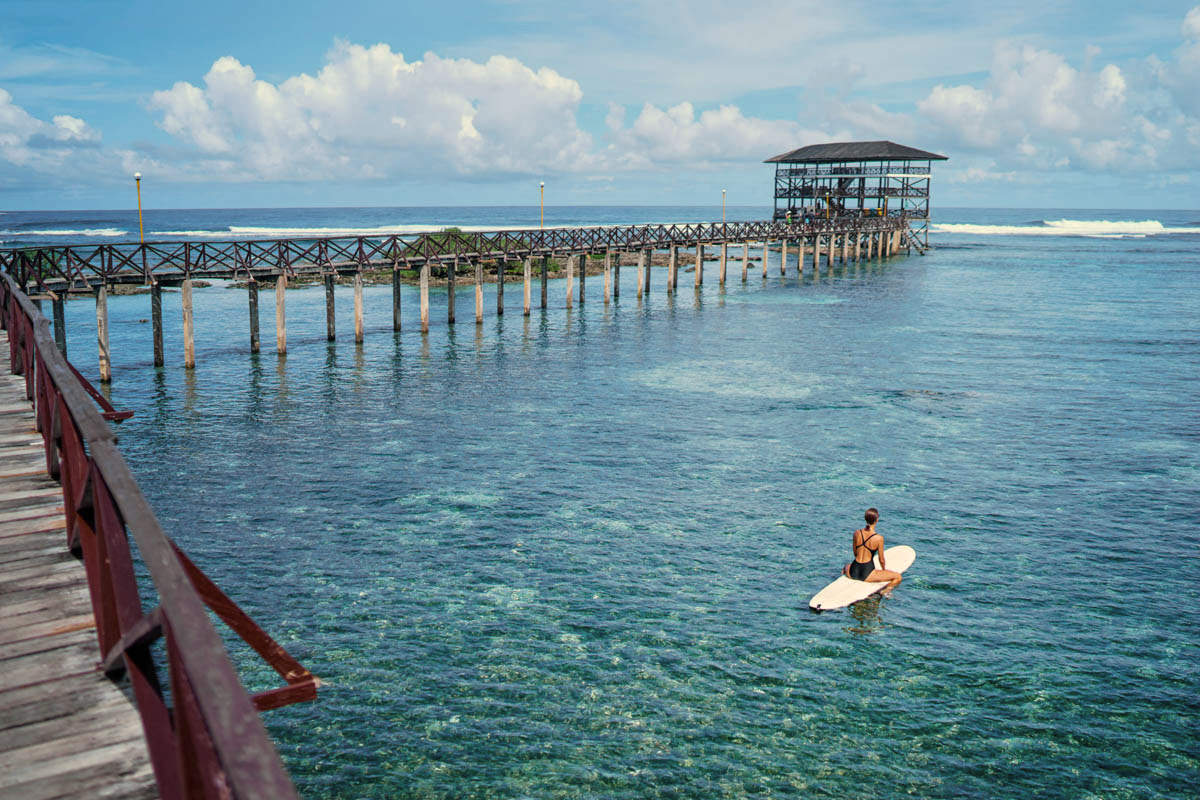
It’s also the busiest time for surfers. The Siargao International Surfing Cup is usually held around this time of year (traditionally in the second half of October), bringing pro surfers, crowds and a buzzing atmosphere to General Luna.
Best for: experienced surfers who are comfortable on reef breaks.
Mid-year: smaller waves, great for learning
Around the middle of the year, the swell is typically much smaller. Experienced surfers may find it too flat, but for beginners it can be a lovely time to learn, with gentle waves and less crowded line-ups.
Best for: first-timers and beginners.
The cooler months: swell, with patience
From around December into the early months of the year, there’s often still swell, but the northeast winds can make conditions messy at exposed spots. Some days are great, others not so much.
Best for: patient intermediate and advanced surfers who like quieter line-ups.
Important: Cloud 9 is a shallow reef break. If you’re new to surfing, learn with an instructor at a beginner-friendly spot first. Your local surf school will know where to go on the day.
Beach and Island-Hopping Season
Not here to surf? No problem. Siargao has so much more.
For island hopping, lagoon swims and beach days, look for a run of calm, sunny days. Many travelers find the drier stretch around March to May especially pleasant for this, though conditions vary year to year.
Whenever you come, a few things are worth planning around:
- Boat trips depend on the sea. Our island-hopping tours can change or be moved if conditions aren’t safe.
- Some spots depend on the tide. Magpupungko Rock Pools only appear at low tide, and the entrance to Sohoton Cove is accessible during low tide. Our guides time trips around this.
- Early mornings are magic. Cooler air, softer light and quieter beaches.
Our Siargao island hopping guide covers the classic Naked, Daku and Guyam trip, plus Sohoton Cove.
Siargao Season by Season
March to May
- Often the drier, sunnier stretch
- Smaller waves, good for beginners
- Great for beaches, lagoons and island hopping
June to August
- Typically small surf, good for learning
- Warm and humid, with some showers
- A relaxed time to explore the island
September to November
- Peak surf season, especially from late September
- Busiest time for surfers, with competition buzz
- Book accommodation early
December to February
- Cooler, with rain more likely on the east side
- Swell around, but wind can make it messy
- Quieter line-ups for patient surfers
Things to Do Whatever the Weather
Rainy morning? Here’s how to make the most of it:
- Take a land tour. The Siargao Land Tour visits Sugba Lagoon, Magpupungko Rock Pools and Maasin River with lunch at a local eatery, starting from ₱7,300 per person.
- Stretch it out. Our Happiness Beach Resort hosts daily wellness activities like yoga, meditation and sound healing. The schedule is posted on our Instagram.
- Eat your way around General Luna. Siargao’s food scene is a surprise for many visitors. Start with breakfast at Goodies and a falafel at Happiness Restaurant.
- Join the community. From bingo to movie nights and Sunday fun days, there’s usually something happening. See our events page.
Want to Learn to Surf Properly?
If surfing is the main reason you’re coming, consider joining a retreat. The Happiness Surf Retreat is a 10-day program in Siargao with daily coaching, video analysis, oceanfront yoga and recovery sessions, for complete beginners through to intermediate surfers. Retreat dates are listed on the page, and some fill up fast. We’ve also written a full guide on what to expect on a Siargao surf retreat.
Where to Stay
Happiness Hostel Siargao is on the main road in General Luna and is a lively base for solo travelers and surfers (guests must be 18 or over). Across the road, Happiness Beach Resort offers private rooms, family cottages and a beachfront villa, with a beach bar powered by Starlink.
Power outages can happen on the island, but all our accommodations have generators. Check-in is at 2:00 PM and check-out at 11:00 AM. If you need to cancel, you can do so by email or phone up to 14 days before arrival (see our terms).
FAQ: Best Time to Visit Siargao
What is the best month to surf in Siargao?
For experienced surfers, the peak is usually from late September to November, when Cloud 9 is at its best. Beginners often prefer the smaller waves of the middle of the year.
Does it rain a lot in Siargao?
Siargao can get rain in any month, and the northeast monsoon brings rain to the eastern side of the country in the cooler months. Showers often pass quickly.
Can beginners surf in Siargao during peak season?
Yes, but not at Cloud 9. Beginners should learn with an instructor at gentler, beginner-friendly spots.
When is Siargao least crowded?
Outside the peak surf months and major holidays tends to be quieter. Line-ups are usually busiest from late September to November.

